Analysis Paralysis

Lock it up.

We’ve likely heard those words from an early age.

Whether we’re looking to protect our property or our own wellbeing, we recognize that we need to guard it behind some sort of resistant barrier. A lock. A passcode. Even a contraceptive.

And a lifetime of closely guarding all we’ve held dear has impacted our feelings about the word lock. It represents our White Knight, our silent protector.

Yet, there are times when that word can mean nothing but doom for us. Such as when machinery we’re using locks up. Or our brains do.

That’s right, we can sabotage our own hopes and dreams by putting our brains on lockdown. I’m not talking about the infamous “Brain Freeze” here — when we seem to act with an absence of thought. I’m talking about the opposite of that.

Namely, I’m talking about the dangers of Analysis Paralysis.

***

We are, by and large, thoughtful people. Our collective exuberance for learning has helped us innovate and organize over Millennia. It’s taken us from cave paintings to computer sciences, quintupled our average lifespan and even allowed us to systemize the passing of knowledge to new generations.

Thought is the engine that’s driven much of what we’ve created, and much of what we’ve destroyed. It’s been touted, both subtly and blatantly, as the must-have attribute in our society.

But the power of thought is not unlimited. It can turn our mind into a pretzel if we’re not careful.

You see, Analysis Paralysis is not just a catchy buzzword. It’s a real, debilitating condition we subject ourselves to, far too regularly.

How do I know? Because I find myself afflicted with it time and again.

Thinking is at the heart of everything I do. I try and learn something new every day, and as my Words of the West readers know, I write at least once a week. But for every moment I ponder something existential and profound, there’s another where I can’t decide what to eat for dinner.

It’s maddening — not only to myself, but also to my friends and family.

Why? Because Analysis Paralysis brings out a vicious cycle of annoying traits.

At first, there’s indecisiveness. While I ultimately do come to a decision, I then feel compelled to back it up with a convoluted logical argument. And finally, regret over the option I didn’t choose kicks in, and I spend hours playing the “What If” game.

By the time this cycle has run its course, I’ve expended a ton of unnecessary energy on a basic decision. It my daily brainpower is a finite resource, I’ve effectively spilled a large portion of it onto the pavement.

It’s sad, even shameful. But, I reckon I’m far from the only one to ever experience this.

***

So, who’s to blame for this onslaught of Analysis Paralysis?

Is it us? Our society?

Truth be told, it’s probably a little bit of both.

You see, our societal expectations are stringent and exacting. We value innovators and thought leaders — those who go the extra mile to expand their minds and horizons.

It takes a lot of work to go that extra mile. In particular, it requires recoding our brain to gather as much pertinent information as possible before making an assessment.

And once we get there, there’s really no turning back.

For all we talk about “flipping an off switch” in our brains or “going on vacation mode,” the reality is that we’re still running all the calculations with every decision we make — no matter where we make it.

Some of us can prioritize these decisions, tuning out the white noise for the basic ones in order to keep them simple.

Others of us cannot.

But, there is hope for those of us in this predicament. Hope that starts with awareness.

  • Awareness of the varying levels of gravity of the decisions we make.
  • Awareness of the debilitating effects of chronic overthinking.
  • Awareness of the benefits of “Letting It Ride” from time to time.

If we can get to this point of conscientiousness, our brains can run a new set of calculations. One that convinces us that choosing between tacos and burgers doesn’t need to be as exacting a process as pondering the meaning of life. One that lets us use our brainpower more efficiently. And one that allows us to preserve our sanity.

We owe it to ourselves, our loved ones and our society to get to this point — to eliminate Analysis Paralysis once and for all. It will make us happier. And it will make us better citizens.

Time to slay this beast. Let’s get started.

River Tales

I recently took a trip with some friends down to Central Texas to float the Guadalupe River. It was an epic weekend filled with hot sun, cold beers and adventure. A summertime treat.

Tubing might seem like a simple venture, but here in Texas, it’s a sacred pastime — a fact that becomes ever more apparent to me each time I do it. For while Texas has countless rivers and lakes, thousands of people converge upon two of them — the Comal and the Guadalupe — in and around the city of New Braunfels each summer. So, on a scorching afternoon, you’re likely to see the river packed with inner tubes and floating coolers. It’s like a giant floating fiesta.

Still, for all the tradition and pageantry of tubing the Guadalupe, it’s a bit surprising that I’ve taken to this activity the way I have. I abhor mud and rocky rapids, and I’ve historically been more inclined to be in the water than on it —  particularly when the mercury hits triple digits. On the surface, tubing would not appear to be “my jam.”

Yet, every time I wade into the refreshingly cool water and climb up into my inner tube, it’s like I’m born again. What gives?

I gave this contradiction much thought during this most recent trip. Then I opened my eyes and realized my answer was all around me.

You see, tubing combines the best of what Texas has to offer in one setting. It melds the serenity of rivers in the picturesque Hill Country with cold beers and friendly people out to have a good time. It’s both individual and communal, peaceful and exciting. There’s something in it for everyone.

And while there are some drawbacks to setting a bunch of people and booze on a natural current, the plusses are that much greater. Tubing has turned New Braunfels — a small city between San Antonio and Austin — into a summertime mecca, complete with more hotels and restaurants than many Texas towns its size can boast. This, in turn, has produced plenty of jobs around town for the locals — to go along with those offered by the tube rental businesses upriver.

Just as importantly, tubing allows Texans of all origins to come together in one place. On my most recent journey downriver, I met people from Houston and Odessa — two cities 500 miles apart. While it’s no secret that Texas is a big state, it is a secret outside these parts that Texas is the Caddo word for “friend.” And while some like to spin the narrative that Texans are angry gun-wielding pickup truck drivers, the real narrative is right there on that river — where strangers from far corners of the state gather as friends in peaceful recreation.

Yes, the stories are what I love the most about tubing the Guadalupe. The story of the river winding through limestone hills, same is it did back when the buffalo roamed free. The story of how some pioneering Texans created a summer recreational paradise on those waters, all while taking little more than what the river and hills already gave them. The story of how a small Texas town became a renowned destination. The story of how people from all over Texas take part in the experience, socializing with strangers along the way. And yes, the stories of the adventures you encounter on the way downstream.

(Those tend to be a doozy, as was the case on this recent trip.)

These stories are what makes this activity so timeless and resonant. At the core, these stories what it means to be Texan.

I realize how special all of that is. And it’s why I’m already excited for my next trip down the river, whenever that may be.

The Ballpark Odyssey

I recently completed a journey to visit every operating Major League Baseball stadium.

It was quite an undertaking — one I’ve dubbed the Ballpark Odyssey. My travels took me to 37 ballparks over 18 years — including all 30 current Major League ballparks.

This odyssey allowed me to experience the timeless wonder of Boston’s Fenway Park and Chicago’s Wrigley Field. It introduced me to the modern gems that are Pittsburgh’s PNC Park and Baltimore’s Camden Yards. It took me from Seattle to Miami, San Diego to Detroit and everywhere in between. Heck, it even led me north of the border to Toronto.

I did far more than watch baseball along the way. Indeed, I got to sample regional ballpark cuisine at nearly every stop. I got to sing Roll Out the Barrel with the hometown fans in Milwaukee and clap along to Deep in the Heart of Texas between innings here at home. Most of all, I got to enjoy the American summer tradition of going to a Major League Baseball game in every venue that offers the experience.

As I reflect back on this achievement, I think of all I’ve learned along the way. I started out as a kid who loved to watch baseball and ended up as a man who loves all that America has to offer. Getting to experience all of our nation’s great cities and meet some of the people who call them home has been a tremendous blessing, one that has helped me understand our nation far better than I once did.

I also think of everyone I shared these ballpark experiences with. For while I did go to a couple of ballparks solo, I was generally accompanied by family and friends. In particular, I think of my father, who inspired me to go on this journey in the first place and frequently joined me on mini-trips to “cross some ballparks off the list.”

But most of all, I think of the memories that I made as I got ever closer to achieving my goal. Memories such as:

  • The blustery Sunday afternoon I spent with my sister and a close friend in the last row of Wrigley Field. It was a bit too chilly to enjoy my Old Style beer, but that was one of the best days of my life.
  • The game at Detroit’s Comerica Park where a man in our section convinced my dad to get a Coney Island and then taught him the proper way to eat it.
  • The time my mother insisted on getting club level seats at Camden Yards, simply because it had an air-conditioned concourse.
  • The evening when my cousin and I got upgraded from the upper deck to third row seats at San Diego’s Petco Park. (Thanks again for that, Travis!)
  • The fateful night when the Yankees and Mariners got into a benches-clearing brawl at Seattle’s Safeco Field.

I don’t remember the scores of all the ballgames I went to, but I’ll never forget these experiences.

That’s what it’s all about. And it’s why my now-completed Ballpark Odyssey is something I’ll cherish for the rest of my life.

Our Culinary Conundrum

What’s the universal language?

Some would say love. Or numbers. And they wouldn’t be wrong.

Both have brought us together and torn us apart. They’ve allowed us to sustain and grow over the millennia.

And they’re consistent around the globe. But that might be a problem.

You see, language is defined as much by its variations as by its meaning. By the differences between a Boston accent and a Minnesota one. By the chasm between French and French-Canadian.

The concept of love doesn’t quite have these distinct variations. And the world of numbers is standardized by definition. Due to these concrete realities, I feel that neither of them qualifies as the universal form of expression.

So, what do I consider the universal language?

Food.

Much like love and basic arithmetic, we need food to survive. But the way we go about satisfying that need varies greatly by palette, dietary restrictions and region.

Yes, much like traditional language, food certainly has its intricacies. A sandwich filled with sliced steak might be known as a Philly Cheesesteak, a French Dip, or an Italian Beef — depending on how and where it’s prepared. Although these dishes have a similar base, they’re actually quite distinct.

Our palette for these variations has spurred its own word — cuisine. And if we happen to live in a major metropolitan area, there’s a pretty good chance that we can explore much of what the world of cuisine has to offer without hitting the road or hopping on a jet.

Yet, this appears to be changing.

***

I’ve lived in North Texas for the past several years. While there are many things to love about Dallas, the wide variety of food options is certainly high on the list. In fact, I’ve had everything from Cuban sandwiches to Cajun delicacies, Nashville-style Hot Chicken to Texas barbecue in or around Dallas.

Lately, however, I’ve seen those options dwindling. New restaurants in resurgent parts of town have abruptly closed up shop, and regional chains have shuttered many of their locations. Abandoned restaurant properties now line the highways and major intersections like an eyesore.

The bursting of the restaurant bubble has left me in a bit of a bind. I now have to drive further to get something other than fast food, Chili’s or quick-service Mexican fare. And if I have a hankering for something like the aforementioned Italian Beef, I might be out of luck entirely. (Despite the large influx of Chicago transplants in Dallas, Illinois-style eateries have struggled to find traction.)

At the same time that restaurant selection is dwindling, so are my options at the supermarket. In the past year, my grocer has pulled several varieties of cold cuts from the deli and stopped supplying basic items such as sausage buns, skirt steak and coarse ground beef. This has forced me to either improvise or drive to a competing grocer for supplies when making such basic dishes as fajitas, chili or bratwurst.

I understand the financial realities that have led to these cutbacks. Commercial rents in are rising — both in North Texas and across the United States — but people are still unwilling to help cover that increase by paying more for their meals or groceries. It’s an equation that doesn’t add up, so culinary variety inevitably ends up on the chopping block.

Still, I’m discouraged by these cutbacks. On one hand, it limits my options and makes cooking more challenging. On the other, it shows that our society doesn’t varied meal options.

Consider the implications of this shift:

  • Food is being constrained into two classes: Widely accessible junk and highly restricted healthy options. If you don’t want fatty burgers, greasy pizza or gooey mac and cheese, you’ll most likely have to spend extra time, fuel and money to get something better for you — or even something different.
  • Dietary issues are ignored. Despite the best efforts of the gluten-free Millennial revolution, cutbacks on food options mean those of us with actual sensitivities to wheat, dairy, sodium or processed fats often find ourselves struggling to find a suitable meal option.
  • We’re lowering the bar. While we must adapt to dwindling food options, we can at least remember that there was once a greater amount culinary variety lining both the streets and the store shelves. But if the current trend holds, the next generation won’t have this perspective — which means it will be less likely to be reversed.

None of this is ideal. But while we’ve been complicit in our culinary demise, we’re not at the point of no return.

***

If we can see the value in our universal language and recommit to exploring it en masse, we can turn the tide.

That means swallowing our pride a bit, and getting out of our comfort zone. It means putting an end to our crusade to pinch pennies when filling our mouths — a losing proposition anyway, given the expensive health issues junk food leads to down the line.

It means committing to try new things and support the establishments that provide them to us. If restaurants see the cash register ringing, they’re more likely to thrive. And if items are flying off supermarket shelves, they’re less likely to end up in closeout.

Ultimately, it means using our collective voice to serve notice that we demand more options, more variety and more accessibility. The Internet age has given us the tools to do this, but we must do it together.

Don’t let our universal language suffer the fate that the Comanche, Welsh and Latin languages did. Our culinary future is at stake, and we have the booming voice needed to make a stand. Let’s use it.

Award Mentality Aversion

I still remember the first award I ever received.

OK, that’s a lie. I grew up during the beginning of the dreaded “Participation Trophy” era, so I surely got some ribbons or certificates for preschool activities that I can no longer recall.

But the first award that ever had any weight to it — I got it more than half my life ago.

It was for a top 15 finish in a Cross Country race — the charter school state championship race for freshmen.

I remember taking my medal and thinking, “I deserve this.”

You see, I was a scrawny kid back then. Couldn’t have weighed more than a buck thirty. I didn’t much care for running long distances, but I did want to play baseball. So, when the Junior Varsity baseball coach approached me about joining the Cross Country team (which he also coached), I was in no position to say no.

But I was also in no position to succeed.

The idea of pushing myself to the limit was a bridge too far for my 14-year-old self. So, I ate greasy food and downing sodas before practice. I walked backcountry portions of the course. And I counted down the days until I wouldn’t have to run quarter mile windsprints uphill in a driving rainstorm.

When I won that medal in the last race of the year, I viewed it as my reward for time served. I walked away from Cross Country, never to return.

Only now — 15 years later —  am I running outdoors regularly again.

***

I still remember the second award I ever received.

I got it my senior year of college, at the student TV awards ceremony. It was a ceremony I helped organize, through my role as treasurer of the student broadcast council.

I spent most of the evening sitting near the back of the courtyard where the ceremony was being held. I deliberately stayed out of the spotlight, as my friends and mentors picked up well-deserved accolades for their work with UMTV — our college TV station.

This night was about them, and I was happy just to be a part of it.

One of the final awards of the evening was the Rex Pompadur Award, honoring exceptional service to UMTV. I was preparing to applaud the winner when I heard:

“And the award goes to…Dylan Brooks.”

I froze.

“Is Dylan here?” the presenter asked.

Still stunned, I shakily stood up and took the long walk to the podium, nearly tripping over an audio cable on the way there. I sheepishly accepted the award to loud applause. Then I took the long walk back to my seat, wondering what in the world had just happened.

Never in a million years did I think I would win an award that night. And when I did, my only thought was, “I don’t deserve this.”

Don’t get me wrong. I was proud to volunteer many hours of my week to writing and producing various news and sportcasts on UMTV. But there were so many others who put in just as much time, if not more.

I felt the award belonged to them, not me. In fact, I felt so strongly about this that I emailed the UMTV faculty advisors, asking to return the award. They refused my request, explaining that I was indeed worthy of the award. So, I reluctantly held on it.

***

Fast forward to today. I still have both awards.

The Rex Pompadur award sits on a display tower in my living room, underneath only two items — a picture of my family at Christmas and my grandfather’s Naval portrait from World War II. The Cross Country medal is hidden in a closet.

The placement of these items speaks volumes.

You see, I’ve grown a lot in the years since I first put that medal around my neck. In particular, I’ve learned that nothing in life is granted, and that a life chasing accolades is a life wasted.

I’ve come to appreciate the journey over the destination, the grind over the glory. And I’ve witnessed firsthand how helping others to achieve their hopes and dreams can help me achieve mine more than a plaque, medal or framed certificate ever could.

In short, I’ve developed a healthy aversion to the award mentality, and all it represents.

Today, I’d rather display the award I didn’t expect — and the one I didn’t feel I deserved — to the one I desired for all the wrong reasons. It’s a better representation of who I am and what I stand for.

And while I’m not one to throw stones, I do feel the world would be a better place if more of us practiced Award Mentality Aversion.

For the dogged quest for trophies and accolades runs can corrupt us, keeping us from being team players. It can lead to self-absorbedness and narcissism, and make us less likely to share and communicate.

This is a particularly problematic trend in our divisive society. And it runs counter to the spirit of awards, which are meant to be more an honor than a giveaway.

But it’s not too late for us to change the narrative. It’s not too late to shun the award mentality and focus on what really matters.

Ready to begin?

Eyes Wide Open

It’s amazing what a bit of perspective can do.

As I grow older, it seems that I’ve finally got my eyes wide open.

Everything is coming into focus. Not only the way the world works and where I fit within it. But also the way I work, and how that affects those around me.

These types of things took time, experience and deep introspection to fully grasp. Yet, once I did grasp them, I found myself full of regret.

Regret for the ignorance of my youth. Regret for the way I once treated those closest to me. Regret for the biased worldview I once carried with me.

Yes, the error of my prior ways rang true and clear. And all I could do is play the What If game, wishing that my current perspective on life also existed in years gone by.

This, of course, is ridiculous.

Our mind doesn’t come fully loaded. We must experience, learn and grow in order to build perspective.

It’s a process that takes time, patience — and a lot of mistakes. To err is human, because the lessons from those errors allow us to explore the boundaries between right and wrong.

This first-hand experience can be messy at times, and even cringe-worthy in hindsight. But it’s also essential.

For without this, we can’t have perspective. We can’t have meaningful introspection. We can’t get to the point where our eyes are wide open.

And that’s a spot worth getting to.

So, let’s take all those regrets we might have for our prior ignorance and replace them with a new sensation — gratitude.

Let’s be grateful for the road we have traveled. For the lessons we have learned. For those who have continually stood by us, even back when we were naïve and immature.

Let’s be grateful for our newfound perspective, and for the time we have ahead of us to apply it to our experiences. Let’s be grateful for all we have now, and for all the great things that could be in store for us moving forward.

Most of all, let’s forge ahead with a clear mind and a full heart.

For while much can be learned from the past, life can’t be lived there.

Best to be looking forward with eyes wide open.

The Year of Disconnect

Another journey around the sun is nearly complete.

While I have made my feelings known regarding our collective reaction to the innocuous changing of a calendar, the fact remains that many of us are quite reflective at this time of year.

With that in mind, I’ve taken a look back at what’s happened in the past 12 months, and what we can gather from it. While life is generally a mix of routine and random events that makes such an activity trivial, I quickly came to realize that this year has had a common, yet disturbing theme.

2016 has been the Year of Disconnect.

The sad irony of this statement cuts deep. We now live in a world where African tribal elders can access the Internet from the palm of their hand. It’s a world built for sharing and instantaneous collaboration. But at a time when technology has allowed us to connect more effectively than ever before, all we seem to want to do is disengage.

Whether we’re talking about the divisive U.S. election, the Brexit vote, deteriorating race relations in America or the seemingly endless parade of celebrity deaths, so much of 2016 seems to have been about the fracture of something once communal. It seems to have been about the loss of trust, decency and respect. About doubt and uncomfortable questions.

This is not the world I want. I’ve devoted my life to building communication, trust and connection because I believe those principles can make the world a better place. Humans are capable of both amazing and horrifying feats. The difference between the two so often lies in how well we can build connections with each other based on trust.

The steps we’ve taken away from connection in recent months have been discouraging, but all is not lost. If we can take heed of the direction we’re heading and make the right adjustments, we can steer ourselves back on course.

For me, this means removing hate from my heart, and from my vocabulary. It means preaching unity, even with those I vehemently disagree with. It means building connections upon empathy, and urging others to do the same.

For others, the tactics to rebuild what’s broken might be different. After all, we are all unique, and each of us has our own tools to build with. But if we can all work toward reinvigorating a culture of connection, we will get there.

Great things are ahead of us. But we must eschew the patterns we’ve championed in the Year of Disconnect in order to achieve them. Let us begin.

Into the Abyss

Fortune favors the bold.

I believe these four words because I have lived them, time and again. But nothing was quite as bold — or as trying — as my move away from the news industry and into a future of unknowns.

Some have asked what led me to abruptly walk away from a career I’d devoted so much to, but quick explanations can only go so far.

This article delves deeper.

November 15, 2012

It was a normal Thursday in the newsroom at KMID Big 2 News, the ABC affiliate in Midland, Texas. Eight days had already passed since President Barack Obama had won re-election, and the shine of pulling off flawless election coverage had finally worn off. Thanksgiving was a week away and a busy ratings period was winding down.

As I got to work putting together the 5 PM newscast, I felt as if the finish line was in sight. As KMID’s Executive Producer, I had devoted a lot of time and effort into making sure election coverage went to plan — an important initiative, as previous years’ election newscasts had been doomed by technical glitches and other blunders. I’d also followed that triumph with a trip to Oklahoma for a college football game, so I had little left in the tank on this particular Thursday. However, I happened to be working a half-shift, so some long-needed R & R was finally in sight.

Or so I thought.

It was about 4:40 PM — 20 minutes from the start of the 5 PM newscast. I was doing my final check of news scripts when the police scanner went off.

All units be advised. Accident with train. Garfield and Front.

There was no time to think. I instinctually went into breaking news mode.

I sent a cameraman to the scene and called Midland Police to get more information. I quickly learned that a Union Pacific train had collided with a parade float carrying military veterans and their spouses.

It was a truly horrific incident, but this was no time to reflect. There was much more to be done, and precious little time to do it all.

I immediately broke the story on the station’s website and Facebook page, rearranged my newscast and wrote new scripts to account for the new lead story. Then I let everyone — production staff, reporters and news anchors — know what was changed, and what I needed them to do. I did all of this in less than twenty minutes, and the ensuing newscast went off without a hitch.

When I got back to the newsroom, my office phone was ringing. It was ABC News in New York — producers with the national program were calling to ask me for information.

That when it hit me: I’d hit what some producers might call “The Jackpot.” I’d nailed a breaking news event that went national.

It was the greatest achievement of my career.

But I don’t recall a feeling of exuberance during this defining moment. Instead, I recall a feeling of pain.

These painful memories remain vivid.  I remember a reporter calling me from the accident scene and crying uncontrollably, overwhelmed by the pressure and gravity of the situation. I recall the ruthless race by our crews to get more information and interviews, even though the victims understandably wanted no part of a TV camera in their face. And most of all, I remember the pit I felt — and still feel — in my stomach, knowing veterans who had been wounded in duty in Iraq and Afghanistan lost their lives in a parade held in their honor.

These images and sentiments stuck with me when I finally drove home around midnight, at the end of what turned out to be a full 9-hour shift. As I lay in bed, I remember asking myself for the first time if the career I’d chosen was the right one.

At my career apex, I’d never felt more low.

November 16, 2012

A breaking news story is like an earthquake. After the initial devastation is over, there are waves of aftershocks.

In the case of the 2012 Midland train wreck, those aftershocks came courtesy of the National Transportation Safety Board.

Now, anyone who’s seen the movie Sully knows that the NTSB arrives quickly after a disaster but investigates slowly and deliberately. As investigators set up camp in Midland and began a series of daily briefings, our station worked diligently to keep up with the latest developments. Suddenly, I found myself working 7 of the ensuing 8 days. There was no weekend for me, no Thanksgiving. My job beckoned, early and often.

By the time Black Friday was over, most of these new developments had mercifully dried up — but so had my energy. As I went into my first extended period of free time in two weeks, I was so tired that I couldn’t do much more than curl up in the fetal position and sleep.

The next day, I did something I would have considered inconceivable just weeks earlier — I started applying to jobs outside of TV news.

December 14, 2012

It was a Friday morning that started the same as any other. I woke up and checked my phone for what I missed overnight. Such is the life of a producer.

As I scrolled through my Facebook feed, something caught my eye. It was a friend’s status that read: “What the hell is wrong with people?”

Knowing something was up, I powered up my laptop and checked the ABC News website. That’s when I learned that a gunman had shot up an elementary school in Sandy Hook, Connecticut — killing several first graders and their teachers.

The pit in my stomach returned. Then I went numb.

After staring into space for who knows how long, it hit me.

I’m going to be cover this horrifying story at work later.

My heart sank.

That day turned out to be the most difficult one of my working life. Even though the incident happened 2,000 miles away from West Texas, spending a full day keeping up with developments in a real-life nightmare was pure torture. There was no silver lining; by reporting on the sickening events of Sandy Hook, we left our viewers as upset as we all were. Yet it was our duty as media members to report the story, even if no one really stood to benefit from it.

It was the ultimate no win scenario, one that seemed to play out in slow motion.

When the day mercifully came to an end, I went home, collapsed on the couch and cried.

At that moment, I knew there was no future for me in news.

March 6, 2013

It was a Tuesday that was anything but ordinary.

When I arrived at the station, I walked into my boss’ office, closed the door and handed him a signed letter — the only letter of resignation I’ve ever drafted.

I told my boss when my last day of work would be and we shook hands.

As I walked through the newsroom, the evening anchor turned to me, a look of sadness on her face.

“Dylan, did you just…?”

I nodded and continued on to my desk. I didn’t want to be a distraction.

Truth be told, I’d known this day was coming for a few months. I just didn’t know when.

After taking some time to enjoy the holidays, I had begun my job search in earnest in the first moments of 2013. I zoned in corporate communications and Public Relations jobs in Dallas — knowing there were plenty of opportunities there — and I applied to as many job openings as I could find each morning before heading to work.

I had it all planned out. I’d get a job offer, put in my two weeks, move to Dallas and get started in my new profession. It was all so simple.

There was only one problem. I didn’t get a single job offer.

With 20-20 hindsight, this makes sense; no hiring manager worth their salt was going to give an unproven commodity living 300 miles away the keys to the castle. But in early 2013, it felt as if the walls were closing in with each failed job application.

Soon enough, the hourglass did run out of sand. As my KMID contract and apartment lease neared expiration, I knew I wasn’t about to renew either. So on the first Tuesday in March, I formally announced my intentions.

Job or no job, I was heading east.

March 30, 2013

There’s no day quite like moving day.

As the morning dew glistened off my car windshield, my father and I loaded my personal possessions into a U-Haul van. I dropped off my apartment keys at the leasing office and we headed for the highway — my father in the moving van, me in my car.

About 5 hours later, we unloaded the contents of the truck at their new home — a storage unit outside of Fort Worth. I then checked into an extended stay hotel, and my father flew back to his home in the Northeast.

I was on my own, facing an uncertain future.

“This too will pass,” I told myself. “A couple of weeks from now, I’ll have a 9 to 5 job and my own apartment.”

Not so much.

July 1, 2013

I turned the key in the lock, opened the door and set foot in my apartment for the first time.

After months of struggles, I’d finally made it.

You see, the two weeks I’d figured I’d need to land a job had turned into three months, as company after company turned me down. But after applying to more than 600 jobs, depleting my savings account and nearly maxing out my credit card to cover basic living expenses, I finally got a job offer. And now I had a place to call home.

I set up a chair in the living room, sat down and thought of the journey I’d been on, along with the new adventures that lay ahead.

It was sobering and exhilarating at the same time.

November 16, 2016

As I look back at all of these moments, one thing is clear.

I made the right decision leaving the TV news industry.

Sure, the road I took was highly unconventional and full of struggles that could test anyone’s will. But it was a road that needed to be taken.

You see, TV news was my passion early in my adult life. It was my career, my future, my dream. But the stress and angst I felt on the job in those fateful last months of 2012 served as a powerful warning. Maybe news wasn’t right for me, or I wasn’t right for it.

The decision to switch careers saved my life, or at least prolonged it. I now have a greater sense of purpose in my life, along with a renewed sense of balance. And I’m forever free of the monumental stress associated with producing TV newscasts — stress that I estimate would have shortened my lifespan by three years if I hadn’t left the newsroom behind when I did.

Much has changed in the past few years since I made this decision. I’ve matured. I’ve become more self-accountable. I’ve made massive inroads in a new career. And, most of all, I’ve gained a world of perspective.

But even with all of these changes, I think back constantly to the decisions I made to get me to where I am now. I understand that they’re a key ingredient of my story, and always will be.

It’s been a wild journey, and it will continue to be one. But I wouldn’t trade one second of it.
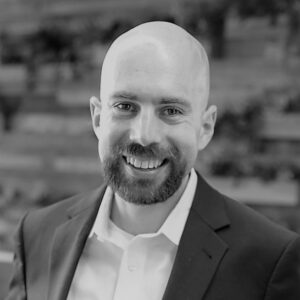
A Year of Wow

This week marks the one-year anniversary of Words of the West. The decision to launch this website was both the realization of a dream and a call for responsibility, and it was a decision I sat on for months until I felt the time was right.

It’s been liberating to share my stories, my reflections and my perspective with the world at large. And the significant task of adding fresh pieces of wisdom every week has kept me both sharp and grounded. But these sensations are just the tip of the iceberg. I’ve learned so much through this experience, in so many unexpected places. And as Words of the West is all about sharing wisdom, I felt compelled to share what I’ve learned so far here.

  • Time Is The Boss: I’m not going to lie — sticking to a weekly schedule is tough. Writing inspiration doesn’t come with a clock; on some weeks, conjuring up fresh ideas was a challenge. While I’m fortunate to have a robust swipe file of ideas, there were definitely some moments where I felt as if I was going through the motions. But I knew that Words of the West deserved my best every week, and that challenge helped keep my writing to a high standard, even on days where natural inspiration was lacking.
  • Consistency Breeds Quality: Looking at some early Words of the West articles and some recent ones, I noticed one major difference — length. The early articles were significantly shorter than recent ones. (In fact, if this was an early Words of the West article, it’d be about over by now. Additionally, many those early articles more poetic in nature — the words had a nice rhythm, but readers had to connect the dots. Over time, the articles became both clearer and more comprehensive.
  • Emotion Is Real: I’ve been writing for most of my life, in one format or another. But I’d never before experienced anything quite like what I felt when I posted Darkness in the Light. As I prepared to publish the article — a firsthand account of the events of September 11th, 2001 — my hands were shaking and my heart was racing. Yes, the process of putting words onto the Internet can be a deeply emotional experience.
  • Think On Your Toes: On a hot summer night, I spent hours writing an article extolling the virtues of Dallas — prose meant to quash the national perception of Big D as a “City of Hate.” But as I was putting pen to paper, 20 miles away, a sniper was taking aim at Dallas Police officers patrolling a Black Lives Matter protest. By the time the sun came up the next morning, five of those officers were no longer with us. Not surprisingly, the article I’d drafted up never saw the light of day — replaced instead with a personal reflection of the event that shook our region to its core. Everything doesn’t always go to plan; it’s important to be prepared for anything — even something terrible.
  • It’s About You: The stories, thoughts and reflections shared on Words of the West have originated from my memories and perspectives. But the process of putting them on this website has changed their purpose; the goal has become to share, not to tell. I realized this early on, and I’ve tried to ensure all articles have a valid takeaway for you, the reader. This has made the writing process a bit more complex, but I do hope it’s been worthwhile for y’all.
  • Tech Is Tough: Writing weekly articles for a website is one thing. Maintaining the site is quite another. Over the course of the year, I’ve made some technical changes, tweaked the website theme, switched to self-hosting and worked around several issues with broken code. While I’m an Internet marketer by trade, rolling up my sleeves and dealing with these technical issues wasn’t easy, and sometimes took several hours at a time. However, these trips down the rabbit hole have been useful; I now understand how to navigate some deeply technical and syntactic components of websites — a skill that will prove useful in the long run.

Looking forward, I’m excited to tackle some new challenges I aim to improve at distributing Words of the West, so that more readers have access to the wisdom contained in these articles. I hope to further customize the website design and get rid of the little quirks that keep me up at night. And, of course, I’m ready to tackle the ongoing challenge of adding high quality writing for y’all to read, week in and week out.

Thanks for reading, and stay tuned. The best is yet to come!

The Grill Brigade

Describe an accomplishment you’re proudest of.

I’ve come across this statement several times — often in a professional setting.

Having held positions at three different companies throughout my adult life, I’ve become adept at answering this question in a manner that conveys my passion and devotion to my career.

The accomplishments I’ve described — either on an application form or in an interview — have helped open doors to new opportunities. And they are things I’m immensely proud of.

But not proudest of.

You see, if I were to answer this question with the truth, the whole truth and nothing but the truth (so help me God), it would do nothing for me professionally.

That’s because the accomplishment I’m proudest of is the weekly football tailgate I organized in college.

***

Football season is back. As crisp fall days make their triumphant return, so many of us are thinking about gridiron traditions — rivalry games, packed stadiums and miles of tailgaters filling the air with smoke from charcoal and propane grills.

As much as I love the game of football itself, those tailgating scenes are what captivate me like nothing else.

There’s something about the smell of burgers and brats in the air, something about the sight of thousands of people cooking out in a parking lot, that just gets me, every time. It doesn’t matter if I head to the game on a full stomach — that scene never ceases to make me hungry.

At first, these tailgating scenes were torture. My family didn’t have a strong football-watching tradition growing up, and when I went to NFL games with my father in high school, we didn’t bring a grill with us. My father couldn’t justify doing all that preparation and cooking just for two people, and his reasoning was sound. But the smell of grills throughout the long walk to the stadium was like a siren song, leaving me feeling empty and jealous.

“Someday, I’ll have my own tailgate,” I told myself.

***

When the University of Miami announced its football team would be moving to the Miami Dolphins’ stadium for my junior year of college, I saw an opportunity.

While so many fellow Hurricanes fans were (justifiably) lamenting the loss of the historic Orange Bowl — hallowed grounds for so many moments in The U’s dynasty years, including a college-record 58 game home winning streak — I was focused on what surrounded the team’s new home. Namely, a sea of parking.

While driving to the OB was nearly impossible, driving to Dolphin Stadium (as it was called then) was nearly inevitable. Since I had a car and an off-campus house at the time of the move, I knew the time was right to fulfill my tailgating destiny. I bought a student parking pass, spread the word about the tailgates to my friends and got ready to grill out.

There was only one problem: while most tailgaters haul their wares on gameday in a Ford F-150, I had a meager Saturn SL-1. Fitting a grill, chairs, a table, food, drinks and condiments — plus 4 passengers — in my compact car was going to be a challenge.

Undeterred, I bought an accordion folding table, some canvas chairs and a camping grill. Then for the first Saturday home game, I packed the truck tightly. Real tightly.

There was so much ambiguity in my mind. Will everything fit? Did I get too much food? Will my friends even show up? Will the grill light properly? What if I undercook the burgers? Will I have enough time to pull this off and make it to the game? But ultimately, the tailgate was a success — so much so that the ensuing game was a blur.

***

I became addicted to tailgating that day, and it instantly became a regular staple of my football experience. Each week I would try and get more people to join in (and chip in). I grilled in the rain and the muggy Florida heat. On weeks where the Canes had an early kickoff, I pivoted to breakfast food.

The following season, I took my show on the road — grilling in a drive-through banking lane that had been converted into a parking lot Miami-Florida State showdown. And for one home game, I ran a tailgate party with my parents and 10 of my friends — a feat that left my father in awe.

But nothing lasts forever. After I totaled the Saturn in a highway wreck during my senior year, I was left without a vehicle for 2 weeks. A friend graciously helped me pull off the final tailgate of the year using her vehicle, but my tailgating days were done. I brought the grill and table with me to West Texas, but I only used them for cookouts at my apartment. When it came time to move to Dallas, the grill only made it as far as the dumpster.

***

As I reminisce my tailgating days, I’m filled more with pride than sadness. I’m proud because I lived a dream beyond my wildest imagination. I went from being seduced by the smell of smoke in the air to cooking out for up to a dozen people each week. Unlike most college students, I found my own tailgates to be my favorite parties.

But I accomplished so much more through these tailgates. For the first time in my life, I undertook the burden of true leadership. I also overcame countless obstacles and learned how to communicate with others productively. These traits have all come in handy as I’ve forged my path in adulthood.

So yes, my time organizing a weekly football tailgate has been my proudest accomplishment so far. After all, it’s been so much more than just grilling out.